
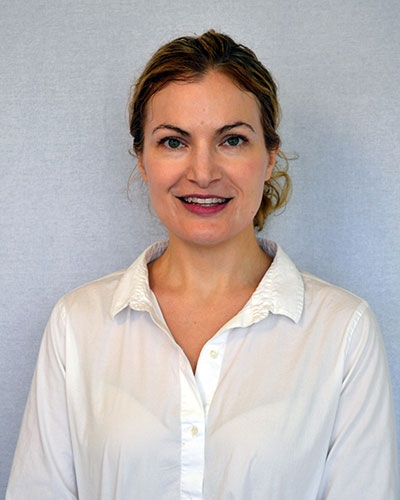
Amina Qutub, Ph.D.
Associate Professor, Department of Biomedical and Chemical Engineering
Burzik Professor in Engineering Design
Contact
Bio
Amina Ann Qutub is the Burzik Endowed Professor of Engineering Design and a Professor in Biomedical Engineering at the University of Texas, San Antonio. She serves as co-director of the Center for Precision Medicine, assistant director of strategic partnerships and research thrust lead of the MATRIX Artificial Intelligence (AI) Consortium, and Director of the UT San Antonio Joint Graduate Group in Biomedical Engineering. Qutub is a co-founder of the AI biotech startups PaloBio, developer of behavioral-focused digital twins for athletes and individuals with atypical neurological conditions, and Selja, building AI solutions for trauma care.
Qutub pioneers methods at the interface of computer science, biology, and engineering to study the design of human cells and help eradicate diseases affecting cells of the brain and vasculature. Qutub co-leads the iRemedyACT project in partnerships with seven hospitals, where her team is developing and testing AI clinical decision-making tools to optimize care for trauma patients. She also directs the Quantu Project, a nationwide study to optimize brain health over a lifespan using an integration of biosensing technology, AI, and neurogenesis bioassays.
Qutub is an American Institute for Medical and Biological Engineering Fellow, National Academies’ Keck Future Initiatives Awardee, The Health Cell Honoree, and NSF CAREER Awardee. Qutub received a B.S. in chemical engineering from Rice University and a Ph.D. in bioengineering from the University of California, Berkeley and University of California, San Francisco, and completed her postdoctoral training as a NIH NRSA Fellow at Johns Hopkins University.
She is a member of the National Academies’ Standing Committee on Advances and National Security Implications of Transdisciplinary Biotechnology. Qutub co-chaired the planning committees for the National Academies’ workshops on Non-Linguistic AI Models (2025); AI and Automated Laboratories for Biotechnology (2024); and Transformative S&T for Assessing and Strengthening Individual-to-Population Resilience under Societal and Environmental Stress (2024).
Degrees
- B.S. Chemical Engineering, Rice University
- Ph.D., Bioengineering, University of California, Berkeley and UCSF
- Ruth Kirschstein NRSA postdoctoral fellow, Department of Biomedical Engineering, Johns Hopkins University
Honors and Awards
- National Artificial Intelligence Research Resource (NAIRR) Pilot Program Award
- Year Awarded: 2024
- Governing Organization: National Science Foundation (NSF)
- Health Cell State of the Industry Inspiring Speaker Honoree
- Year Awarded: 2022
- Governing Organization: The Health Cell
- Fellow
- Year Awarded: 2021
- Governing Organization: American Institute for Medical and Biological Engineering
- World Laureates Symposium, Young Scientist Nominee
- Year Awarded: 2021
- Governing Organization: National Academy of Sciences
- Indo-American Frontiers of Engineering Symposium Participant
- Year Awarded: 2015
- Governing Organization: National Academy of Engineering
- China-America Frontiers of Engineering Participant
- Year Awarded: 2014
- Governing Organization: National Academy of Engineering
- Travel Support for Mathematicians Award
- Year Awarded: 2013
- Governing Organization: Simons Foundation
- NSF CAREER: Virtual, high-throughput model of brain microvasculature regeneration
- Year Awarded: 2012
- Governing Organization: National Science Foundation (NSF)
- National Academies Keck Futures Initiative (NAKFI) Grant
- Year Awarded: 2011
- Governing Organization: W. M. Keck Foundation
- AI Moonshot Innovation Award
- Year: 2026
- Governing Organization: UT REAL Health A
