
Posted on April 8, 2026 by Storm Goodman
In the arctic environment, temperatures average around -30° Fahrenheit, which often can render traditional tourniquet devices non-functional or lead to a myriad of additional problems, resulting in malfunctions and ineffective stoppage of blood flow. In a life-or-death scenario, when a patient requires immediate treatment to prevent further harm, these potential problems could be devastating.
The Arctic is an ideal environment for research and is considered a critical defense point by our military. When in an environment where the narrow margin for life-saving care becomes even slimmer, our team intends to improve outcomes in this harsh environment.
- Abhinaya Lakkureddi
Team Bio-Frost was ready to step up and take on the challenge of reinventing the traditional tourniquet and adapting it for an arctic environment. Through their efforts, they developed the Arctic Wound Stabilization Device, a tourniquet built to function and save lives in sub-zero temperatures. The human body has many different biological procedures in place to help the body deal with blood loss, with clotting being the main factor. In extreme temperatures, this biological process can be halted, preventing blood from clotting. Traditional tourniquet detect blood flow while taking clotting into account, so if clotting is absent, these tourniquet can continue to apply pressure, further damaging the tissue or nerves.
This team of all Biomedical Engineering seniors, which consists of Abhinaya Lakkureddi serving as the team coordinator, Emily Davidson as the design director, Simran Johel as the research coordinator, and Alba Chocron as the implementation director, was able to pinpoint all of the key areas of the traditional tourniquet that could prove problematic in the arctic environment.
The first key area they highlighted is the velcro strap. On traditional tourniquets, a velcro strap is used to affix the tourniquet to the patient, but in freezing temperatures, debris such as frozen blood, ice, or snow could become lodged within the tiny hooks of the velcro. These tiny little obstructions could prevent the Velcro from sticking to itself, leading to the entire tourniquet slipping off. Team Bio-Frost solved this problem by implementing a fastening system more reminiscent of backpack straps.

Next, the team tackled the locking mechanism. To prevent frostbite and other cold-related maladies, several pairs of thick and heavy gloves are required, which can greatly increase the difficulty of applying the traditional tourniquet. This is why the team developed their own locking mechanism, designed to greatly increase ease of use while having limited hand maneuverability. This is the aspect of the tourniquet that the team has focused the most on, working and testing out their various designs to ensure it fits their quality standards.
Finally, they turned their attention to which material types they wanted to use for their device. The team went to great lengths to ensure that their design used affordable and readily available materials that could be found even in Arctic environments. In addition to ensuring that their device remained affordable and accessible, the team also targeted materials with heat insulation properties to further enhance the comfort and care provided by their project.
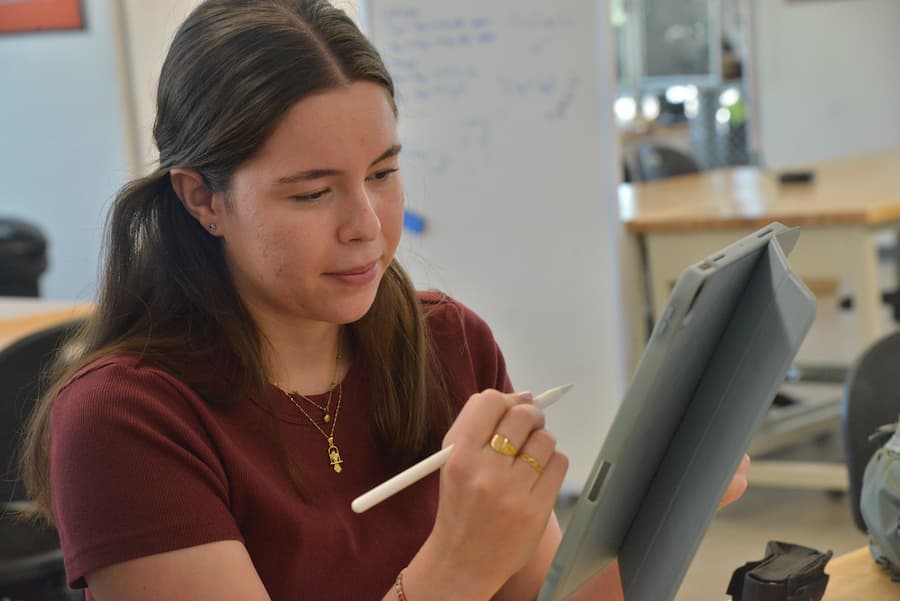
Don’t be afraid because of people who say that engineering is difficult. If you stay on track and really enjoy the work you are doing, it won’t feel as intimidating as expected.
- Abhinaya Lakkureddi
Come see Team Bio-Frost and many more exceptional teams at the Spring 2026 Tech Symposium!
— Storm Goodman
