
Posted on April 27, 2026 by Storm Goodman
To most, that act of cribbing, or crib-biting, looks like nothing more than a harmless behavior or a horse’s personality quirk, but the reality is far more serious than that. Cribbing is a term used to describe a specific type of behavior unique to horses that involves the animal biting down on a fixed object with its incisors, flexing its neck muscles, and inhaling deeply. Horses lack suitable ways of exhaling this extreme amount of air, leaving it trapped within the horse’s body, which can lead to a myriad of health concerns for the animal, including increased risk of colic, gastrointestinal discomfort, weight loss, dental issues, and muscular strain in the neck and head region.
Cribbing is an instinctual comfort method that horses perform to help deal with chronic stress or confinement, so when they first begin cribbing to reduce that stress, stopping the behavior is quite a difficult challenge. The biting motion that horses perform induces an endorphin and dopamine release in the animal’s brain, which can lead to the formation of a feedback loop that encourages the animal to continue this behavior.
When cribbing first begins, there is only an extremely short window to curb the behavior before it becomes a compulsive habit, forcing trainers and other equestrians to act fast. Unfortunately, existing methods of eliminating cribbing behavior in horses are not entirely effective, but they can also cause additional animal welfare problems. Current methods include cribbing collars, muzzles, and behavior interventions, which can include dietary changes, increasing outside time, and other enrichment strategies. Each method comes with its own list of drawbacks. Cribbing collars apply pressure to the neck muscles when the horse engages in cribbing, but when they are overtightened, they can cause tissue damage or further stress for the animal. Muzzles do stop the horse from cribbing, but also prevent normal behaviors like grazing and drinking. Finally, behavior interventions rarely work on their own and also require extreme intervention and observation by the owner over an extended period of time to make sure that the cribbing behavior is eliminated.
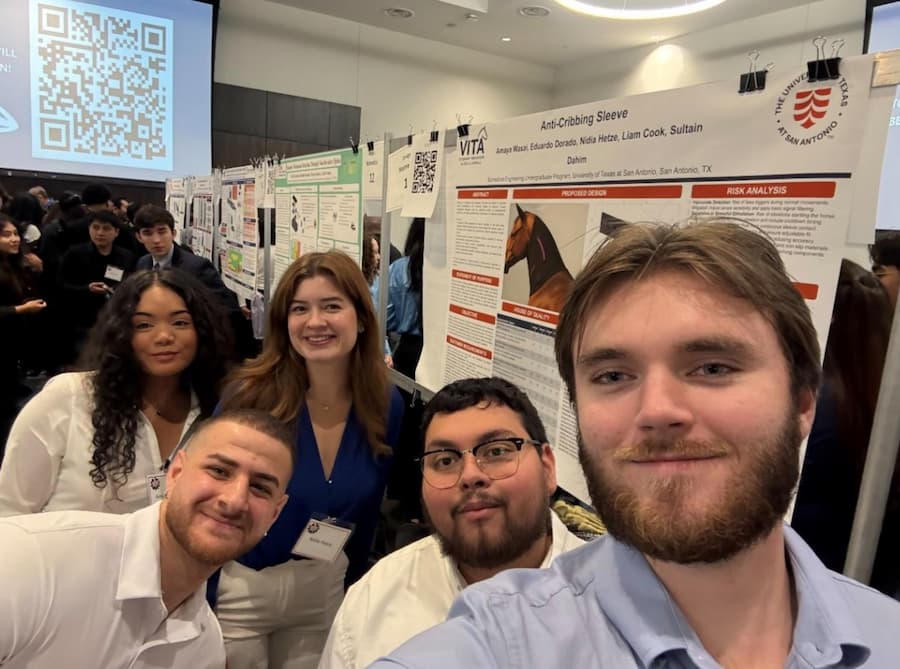
Team VITA, a team of biomedical engineering seniors, saw an opportunity to rethink the approach.
The team, consisting of Nidia Hetze (Project Manager), Sultan Dahim (Co-Project Manager), Liam Cook (Design Lead), Eduardo Dorage (Project Liaison), and Amaya Wasai (Testing and Documentation Lead), developed the Anti-Cribbing Cribbing Sleeve. Their solution, which was built around the principle of curbing cribbing behavior whilst prioritizing the animal’s welfare, utilizes sensors to detect cribbing and a non-invasive feedback mechanism to gently encourage the horse to stop.
We believe our approach has the potential to offer something more humane and effective, and that possibility is what kept us motivated throughout the entire process. We're proud of how far the project has come and excited to see where it goes from here.
-Nidia Hetze
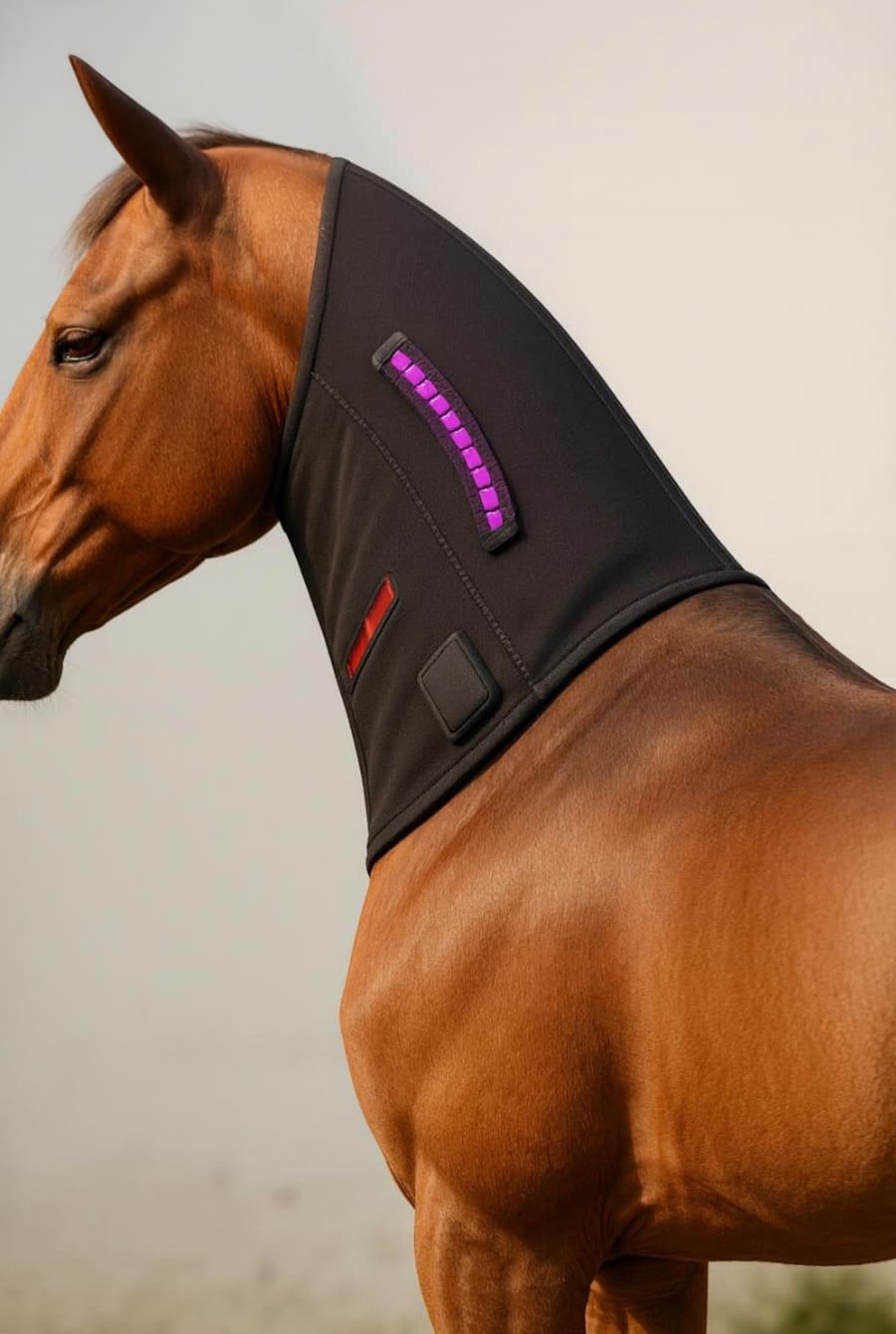
The Anti-Cribbing Sleeve is a soft, comforting sleeve that can be adjusted to fit horses of almost any size and does not prevent any normal horse behaviors, unlike muzzles. The sleeve is fitted with a sensor specifically programmed to detect neck motions that are consistent with cribbing, meaning that the device will remain inactive and non-intrusive to the horse when it is performing any other action. If the sensor detects cribbing, the feedback mechanism will begin to emit soft vibrations that can disrupt the behavior without causing any pain to the animal. With all aspects of the device being designed with the horse’s welfare and ease of use for the owner, Team Vita’s Anti-Cribbing Sleeve addresses all of the problems that traditional methods may have presented.
The project was originally pitched to them by their TA, Louis, whose wife is an experienced horse rider and trainer. This initial connection added a ton of meaning to the project for the team, and from the initial pitch, they have been committed to developing a system that could have an impact on so many people’s lives. There were challenges throughout the process, including getting the sensor's coding and systems just right to specifically detect cribbing behavior, but through relentless trials and testing, the team persevered.
Don't be discouraged when things don't work the first time; as we experienced firsthand in this project, the troubleshooting process is where the real learning happens. Lean on your teammates, ask questions without hesitation, and take advantage of every hands-on opportunity you can find, because there is no substitute for actually building something. The path isn't always straightforward, but if you're curious and persistent, engineering will constantly reward you for it.
-Nidia Hetze
Team VITA would like to thank Louis for his tremendous help throughout the entire process, beginning all the way back at the initial pitch. They would also like to thank Dr. Petersen and the Makerspace for helping them acquire all the tools and equipment needed to bring their concept to life. Finally, they would like to thank Liang Tang, the team’s mentor, for their help in ensuring that the team was on track and tackling each challenge as it came.
Going forward, the team will be finalizing their prototype as they get ready to test it out on a real horse with a cribbing compulsion. From there, they intend to further develop and refine their design as they pursue patent options. The team is excited to continue their work on a project that is so meaningful to them, and they look forward to the opportunity to help out so many equestrians and trainers like Louis’ family, worldwide.
— Storm Goodman
