

Tech Symposium
Tech Symposium
Each fall and spring semester, students convene at the Main Campus at UT San Antonio with booths, ideas and prototypes. A crowd of judges, local organizations, students, faculty and sponsors walk around and talk to the students about their projects and ask questions. Students get the real-life experience of "pitching" their project with hopes of getting funding or support to move to the next level.
Save the Date!
View All EventsNOV
24
2026
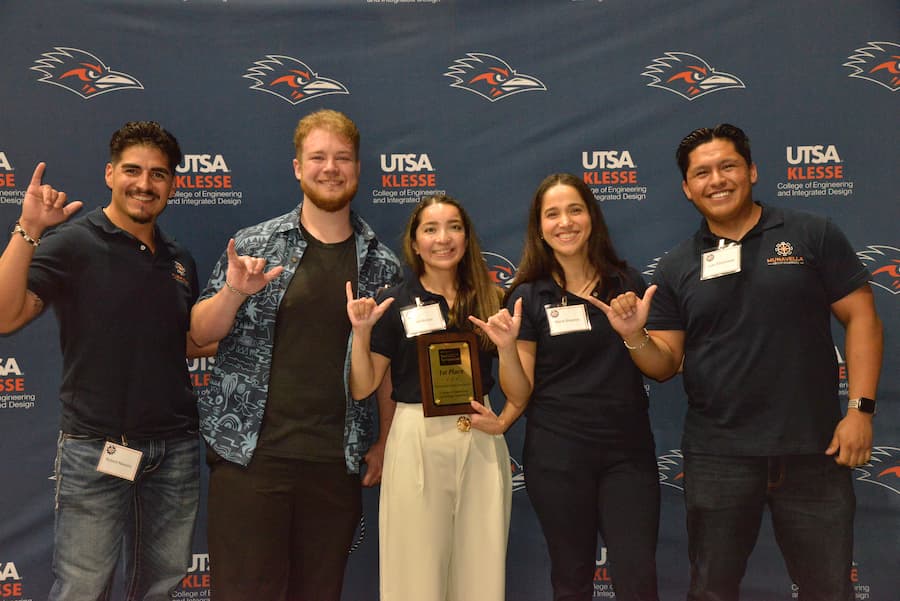
Congratulations to all teams who competed in the Spring 2026 Tech Symposium!
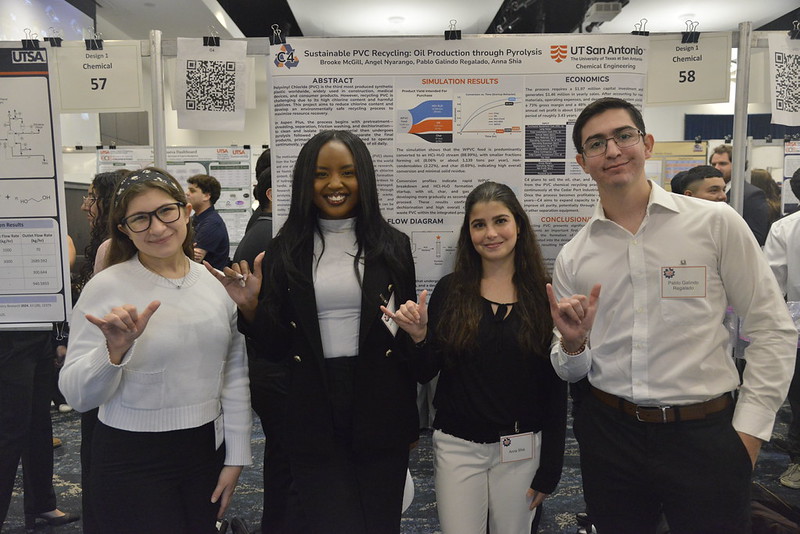
Turning Plastics into Fuel: Sustainable PVC Recycling
Polyvinyl Chloride, or PVC, is one of the most utilized synthetic plastics on the planet, found in construction projects, medical devices, and at-home consumer products. Yet, due to its high chlorine content, it is an extremely hard material to recycle. This team tackled this problem head-on and designed an assembly-line factory system that is capable of breaking down PVC into oil, all in a sustainable manner. Come check out their project and many more at the Spring 2026 Tech Symposium!
Helping Horses Break Habits: The Anti-Cribbing Sleeve
Meet Team VITA, a team that has developed a brand new way of stopping cribbing behavior in horses! Cribbing is the act of biting down on a fixed object, flexing the muscles, and inhaling deeply, which is a behavior that horses engage in when stressed or uncomfortable. Unfortunately, it can also cause a myriad of health issues for the animal as well. Team VITA's device was developed to help curve cribbing behavior, whilst keeping the comfort of the animal in mind. Check out this awesome team and many more at the upcoming Spring 2026 Tech Symposium.
Providing Care in the Cold: Arctic Wound Stabilization Device
Meet Team Bio-Frost, an innovative group of biomedical engineers ready to reinvent the tourniquet for arctic environments. The freezing arctic temperatures can often cause traditional toruniets to fail, making an already volatile situation even worse, but after tons of hard work, these incredible students have found a solution. Check out Team Bio-Frost's Arctic Wound Stabilization Device at the upcoming Spring 2026 Tech Symposium, and see how they designed their project with all the features necessary to save lives at subzero temperatures.

Scanning without the Sun: Low-Light Detection Robot
Meet team Sunny Squad, a team that will be at the Spring 2026 Tech Symposium to showcase their Low-Light Detection Robot. Their innovative project is designed to help researchers studying nocturnal wildlife by providing them with a device that can navigate wilderness terrain whilst filming in the dark. Be sure to check out their incredible project and many more at the Spring 26' Tech Symposium.
Design I
Agentic Frameworks | The Agentic Frameworks project, developed in collaboration with Dell, creates an intelligent system that allows IT administrators to retrieve telemetry information from knowledge graphs using simple natural language questions. The system translates user requests into structured graph queries and returns relevant device insights through clear summaries and visual outputs. By simplifying access to complex telemetry data, the system improves troubleshooting efficiency, enhances system monitoring, and enables faster decision-making for enterprise device management.
Sponsor: Dell Technologies
AI Evaluation of Tire Sidewalls | This project develops a compact automated inspection system for evaluating tire sidewall cuts using computer vision. The system captures high-quality images under controlled lighting and analyzes them to identify and classify defects with improved consistency. A user-friendly interface organizes inspection results and stores data for future review and tracking. By integrating imaging hardware, lighting, and software processing, this solution enables faster and more reliable tire evaluations compared to traditional manual inspection methods. The system aims to reduce inspection time, minimize human variability, and provide a scalable approach for consistent tire quality assessment.
Sponsor: Robert Wickline
BioTag | BioTag aims to support patients with memory-impacting conditions by
providing a reliable, always accessible way to store essential medical
and insurance information. This project incorporates a passive
implantable microchip that securely holds a patient's critical health
and insurance data and communicates with authorized mobile
devices when scanned. By combining secure hardware design with
an intuitive mobile application, our system delivers a safe and
efficient method for sharing medical data when it matters most. This
solution reduces the risk of medical errors, improves continuity of
care, and ensures providers can access vital information quickly in
emergencies.
Sponsor: Chad Elseth, Ann Deacon
Cost-effective Chilled Water Metering for Multifamily Buildings | Chillsense Engineering is developing a cost-effective system to measure chilled-water collage usage in new multifamily buildings, enabling residents to be billed accurately based on actual consumption. Our solution integrates low-cost, off-the-shelf flow meters, a centralized data acquisition unit with strategically placed temperature sensors, and a secure data platform that stores usage and generates unit-level billing reports. The design prioritizes low per-unit cost, straightforward installation buildings complemented by an intuitive software interface that streamlines data entry and automates complex calculations for building management.
Sponsor: UTSA – Real Estate and Property Management
Doppler IVUS | Cardiac output is a critical indicator of cardiovascular health, allowing physicians to record rapid and accurate measurements during critical procedures. However, current temperature dissipation methodology calculates cardiac output with a 10-15 minute delay, which can be life-threatening in critical situations. This project aims to integrate IVUS catheters with Doppler ultrasound to reduce latency by providing near-instantaneous calculation of cardiac output using vessel cross-sectional area and blood velocity. Doppler IVUS will integrate these technologies by implementing signal processing methods that combine IVUS imaging with Doppler frequency analysis, enabling simultaneous measurement of vessel geometry and blood flow velocity for real-time cardiac output.
Sponsor: U.S. Army Institute of Surgical Research (ISR)
ISR Counterflow Dialysis Device | The ISR Counterflow Dialysis Device is a continuation of The Counter Current Flow team's previous efforts. The device addresses the need to extend the shelf life of stored blood, reducing waste and lowering costs for hospitals while maintaining patient safety. The system uses a counterflow mechanism to carefully filter and preserve blood components, optimizing storage conditions and preventing degradation over time. Designed with automated monitoring and controlled flow dynamics, the device ensures safe handling, precise operation, and reliable preservation, providing hospitals with an efficient, scalable, and cost-effective solution for managing blood supplies in modern healthcare environments.
Sponsor: Dr. Evan Ross
Project Guardian Angel | Guardian Angel is a mobile security system designed to improve safety in environments where privacy is essential, such as locker rooms, hospitals, and dormitories. Traditional systems rely on fixed cameras, forcing a tradeoff between constant surveillance and personal privacy. Our solution uses a rail-mounted moving camera that actively monitors public areas and only enters private spaces during emergencies. When triggered, it can respond in real time, providing visibility and assistance without continuous monitoring. By delivering on-demand coverage instead of constant surveillance, Guardian Angel enhances safety while preserving privacy in sensitive environments.
Sponsor: Chad Webster and Zach Robinson
Modular GPU Enclosure | This project proposes the design and development of a standalone
GPU enclosure, capable of housing and cooling multiple PCIe
based graphics cards including the NVIDIA A100 outside of a
traditional server environment. The system utilizes a high-pressure
airflow approach, incorporating both intake and exhaust industrial-
grade fans to efficiently dissipate heat. The design includes a
dedicated enclosure, directed airflow channeling, and real-time
temperature monitoring to optimize cooling performance under
high computational loads. The proposed solution aims to provide
reliable thermal performance while significantly reducing cost and
improving accessibility, modularity, and ease of maintenance
compared to existing commercial systems.
Sponsor: Mario Flores
Project V.E.N.A.T.O.R | V.E.N.A.T.O.R. (Vision-Enhanced Navigation & Tactical Offline
Reporting) is an autonomous drone system designed to enhance
situational awareness in remote or communication-limited environments.
In collaboration with the UTSA Unmanned Systems Laboratory, this
project integrates the OSIRIS flight controller with onboard edge AI to
detect, track, and report human movement in real time. The system
addresses the need for reliable reconnaissance in areas without cellular
infrastructure. By combining AI-based vision, autonomous navigation,
and a robust offline data link with ground control visualization,
V.E.N.A.T.O.R. enables efficient monitoring and rapid response for
search, rescue, and security operations.
Sponsor: UTSA - Unmanned Systems Lab, Southwest Research Institute - Applied Power
Texas Tag and Title Automated Registration Kiosk | In collaboration with Texas Tag & Title, this project is advancing a previous prototype into a fully functional self-service kiosk that streamlines the registration process. The system integrates hardware and software to guide users through scanning documents, entering information, completing secure payments, and verifying data through the State of Texas’s database. This enables on-demand registration and immediate output, reducing wait times and expanding service availability while reducing staff workload and improving overall service efficiency.
Sponsor: Texas Tag and Title
Camera Assisted Nasogastric Tube with Integrated Pill Delivery | This project aims to significantly reduce complications associated
with the blind insertion of nasogastric (NG) tubes, including
accidental lung placement, esophageal or gastrointestinal
perforation, and unreliable X-ray confirmation. It presents the design
of a modified NG tube system that integrates real-time visual
guidance through a miniature camera. A silicone cross-slit valve is
incorporated to allow camera insertion while maintaining an airtight
seal under typical operating pressures. The system preserves
standard suction and feeding functionality while improving placement
accuracy. Key design considerations include biocompatibility,
minimal increase in tube diameter, and compatibility with existing
clinical workflows. This solution aims to reduce reliance on
radiographic confirmation while enhancing procedural safety and
efficiency.
Sponsor: Dr. Ali Seifi
VitalVac Precision Pediatric Suction Canister | The VitalVac Control Canister is a pediatric suction device designed to maintain safe and consistent suction pressure during clinical procedures. Millions of infants are hospitalized annually due to airway complications, yet most suction systems are optimized for adult use and may deliver excessive or unstable pressures. The device integrates pressure sensing and active flow regulation to continuously maintain suction within a safe pediatric range, while providing real-time monitoring through an LCD interface.
Sponsor: UT San Antonio Medical Design Innovations Laboratory
Self Defense Project: Zeus | Zeus is a handheld self-defense device designed to protect school staff and
civilians during active threat situations. It uses high-intensity sound and strobe lighting to temporarily disorient an attacker from a safe distance, buying critical time until law enforcement arrives. This device addresses the lack of effective, less-lethal safety tools. It focuses on a solution that is both easily accessible and compliant with regulations. Zeus is designed to be easy to use in high-stress situations, combining ergonomic controls, built-in safety features, and regulated output to ensure effectiveness without causing permanent harm to the aggressor or bystanders.
Sponsor: Bret Van Delden
Automated Adjustable Wingtip. | Inspired by the Airbus A350 sharklet and Boeing 777X raked wingtip, the system features a modular tapering clip skeleton, bio-inspired tendon wires, an outboard electric motor, an underside plate lock, and a flexible CFRP-elastomer skin. Designed for controlled flexion between a neutral flat position and a fully curved 90° configuration, the device enables dynamic vortex control and induced-drag reduction. Wind-tunnel testing at 30 m/s will compare the two static positions for aerodynamic performance, while a separate demonstration model showcases real-time actuation. The project targets 2–5% fuel-efficiency gains and improved gust-load alleviation for next-generation commercial aircraft.
Sponsor: The University of Texas at San Antonio
Prosthetic Arm Project | This project aims to design and fabricate a low-cost, user-controlled robotic prosthetic arm for trans-humeral amputees. The primary goal is to restore three crucial degrees of freedom—elbow flexion, wrist rotation, and hand grip—while maintaining a lightweight profile to prevent user fatigue and spinal asymmetry. To safely support demanding payloads at full extension, the elbow joint incorporates an innovative hybrid actuation approach. By balancing passive gravity compensation with active motor drives, the system minimizes power consumption while ensuring robust lifting capabilities, delivering a highly functional and safe prototype.
Sidewall Compression System (SCS) | This project involves designing a mechanical system to enhance tire sidewall inspection by automating the detection of structural cuts. The system securely mounts and rotates tires under controlled radial pressure, ensuring clear visualization and easy sidewall imaging without manual operator exertion. Featuring an invertible design for efficient dual sided processing, the system is built with a focus on adjustability and precision.
Sponsor: Continental
Boeing 757 RB211 Thrust Reverser Blocker Door Repair | This project addresses structural damage in the hinge lug of the Boeing 757 RB211 thrust reverser blocker door, a critical component that transfers loads during deployment and stow operations. Repeated cyclic loading can cause wear and damage, often leading to costly replacement or complex repairs. The objective is to develop a validated, repeatable, and cost-effective repair procedure that restores structural integrity, preserves original geometry and load paths, and maintains airworthiness. The final deliverable will include manufacturing guidance, material specifications, and technical documentation supporting continued serviceability and engineering approval.
Sponsor: United Airlines
Automatic Narcan Dispenser (A.N.D) | The Automatic Narcan Dispenser (AND) is a wall-mounted system designed to provide reliable, 24/7 public access to naloxone on university campuses. The device dispenses one dose per actuation with high reliability, intuitive two-button operation, and ADA-compliant accessibility. Engineered for durability and scalability, the system features a vandal-resistant enclosure, modular internal storage, and controls integration for stock monitoring/emergencies. Prototype units will be fabricated, installed, and performance-verified to ensure safe, low-barrier emergency access while supporting long-term campus-wide deployment.
Sponsor: Michael Vela, Well Being Services
Dehydrating system for fuels | Our senior design project's aim is to develop a system capable of reconditioning fuels and lubricants by extracting water present in emulsified or dissolved form within the fluid. During normal operation and storage, fuels and lubricants absorb moisture from the surrounding environment. Water contamination promotes corrosion, reduces lubrication effectiveness, and accelerates wear in critical mechanical components found within engines, transmissions, and industrial machinery, shortening equipment service life. This project aims to design and evaluate a cost-effective and efficient dehydration solution to improve fuel cleanliness and extend equipment
life. The system will focus on practical implementation, performance, and economic feasibility.
Sponsor: UT San Antonio- Dr. Keith Axler
Reconfigurable Modular Synthesizer Testbed | This project develops a reconfigurable modular synthesizer testbed designed for educational and experimental analysis of electronic signal behavior. The system enables users to isolate and modify key components such as oscillators, filters, and amplifiers through a switchboard and breadboard interface. Real-time waveform visualization via an oscilloscope and auditory feedback through audio output allow direct correlation between circuit changes and signal response. The platform is housed in a portable, multi-compartment structure and supports flexible, hands-on learning, facilitating deeper understanding of circuit design, signal processing, and system-level interactions.
Sponsor: Keith Axler
Lunar Laser Communication | This project focuses on the design and development of a precision laser communication gimbal
intended for integration within a lunar lander. Our team will design and develop a pointing and
positioning subsystem for a laser transmitter; a two-axis gimbal system, that operates under
specified size, weight, and power constraints while maintaining accurate pointing capability
toward a designated ground station on Earth. The laser will allow for optical communications
with the intent of faster data downlink speeds to enable a more cost-effective approach for data
transmission in future space exploration.
Sponsor: Kert Retherford
Additively Manufactured Regolith Excavation Drum | This project investigates the use of additive manufacturing to produce a regolith excavation drum more efficiently than traditional fabrication methods, which are time and labor-intensive. The proposed design consists of two mirrored subcomponents joined using an industrial adhesive. The geometry has been optimized specifically for metal additive manufacturing to reduce stress concentrations and minimize potential failure points. The assembled drum will be integrated with a motor-driven shaft to enable effective excavation and deposition of regolith. This approach aims to demonstrate a viable, manufacturable solution for regolith handling in harsh or remote environments.
Sponsor: UTSA
Ostomy Assistance Table | This project focuses on the design and development of an ostomy assistance table intended to improve hygiene, safety, and user independence during ostomy care. The system provides a stable, adjustable, and portable surface that supports essential tasks such as draining, cleaning, and replacing ostomy bags. Key features include height adjustability, integrated drainage components, and easy to clean materials. Engineering methods such as CAD modeling, material selection, and prototype testing are applied to ensure functionality and usability. The final outcome is a validated prototype that enhances accessibility and quality of life for individuals living with an ostomy.
Sponsor: STOMAWELL
Steady Swing Pro Trainer | The Purpose of this project, sponsored by DistrictFlex, is to enhance a golfer’s swing
performance by capturing real-time pressure distribution data across the golfer’s feet. A golfer’s pressure distribution is vital for perfecting their swing mechanics, maximizing their power output, and preventing any injuries. This device is intended to be a training tool for amateur golfers to achieve proper form while remaining affordable to produce so all people can use it. The SSPT will be adjustable to accommodate users of varying weights, foot sizes, and stance widths while remaining user-friendly.
Sponsor: DistrictFlex
Flat-Trac Reconditioning Station | Our team is doing a redesign of a Flat-Trac Reconditioning station that a previous senior design group worked on. The objective is to implement a heating element to the fixture, as well as a new structural design to better support the rotating drums of the fixture to eliminate sag and properly tension the steel belt that will be fitting around the drums.
Sponsor: Continental Tire (Shawn Jones)
Modular Trailer Brake System | Continental Tires does intensive off-road tire testing at their Uvalde proving grounds with a fleet of trucks and drivers. To reduce the number of vehicles and drivers required for testing, a previous senior design team devised a trailer system to test more than 4 tires per vehicle. However, this trailer requires a brake system that will help with driver control. This brake system needs to be able to support multiple different wheel sizes with varying bolt patterns, support quick tire changes, and be able to stop roughly 4000 pounds going at 35 miles per hour.
Sponsor: Continental Tires
Pallet Conditioning Rotisserie System | This project addresses a critical safety hazard at Knight Aerospace, where operators manually flip heavy aluminum cargo pallets. To solve this, the team designed an adaptable fixture to safely interface standard military 463L pallets with existing, unused industrial rotisseries. The solution features a manually operated, four-point toggle clamping system utilizing a telescoping square-tube design. Engineered without requiring electrical power, the system securely supports up to 3,000 pounds and maintains a safety factor of 3.0 during a total gravity inversion. Finite element analysis confirms the structural integrity of the design.
Sponsor: Knight Aerospace
Application of Multi-Layer Insulation for Thermal Stability During the Lunar Night | The lunar surface is a challenging environment on which to conduct research due to the wide temperature swings between day and night. Lunar temperatures can be measured as high as 390K (116.9ºC) during the day, and as low as 80K (-193.2ºC) at night, with each day and night period spanning anywhere between 14-16 Earth days. These temperatures are known to destroy most electronic devices, even when powered off. This project aims to implement a Multi-Layer Insulation system surrounding a container housing electronic test equipment, allowing it to survive the lunar night.
Sponsor: Dr. Kurt Retherford (SwRI)
Depowdering Machine for UT San Antonio Renishaw AM400 | This senior design project focuses on developing an automated de-powdering machine tailored for the Renishaw AM400 laser powder bed fusion printer (LPBF). The objective is to improve post-processing efficiency, reduce labor time, and limit operator exposure to fine metal powders. The design implements vibration systems, an argon purge system, a rotating mount, and a material handling system. The design includes a powder recollection hopper for reuse. The proposed project aims at reducing the risk of de-powdering and automating the time-consuming process.
Sponsor: UT San Antonio Makerspace
Design II
Foot Powered Nebulizer | Respiratory disease is a widespread problem in displaced communities, where nebulizer devices are among the most effective methods of treatment. These devices typically rely on electricity to power coils or compressors that aerosolize medication for inhalation and delivery to the lungs. However, in areas without readily available electricity, traditional methods of powering inhalation devices become inaccessible. Absolute Stability's solution is to develop a human-powered device that delivers the correct dosage for effective respiratory treatment while maintaining a simple, easily reproduced, and maintainable design to empower under resourced communities.
Development of an Ultrasound-Guided Junctional Tourniquet for Rapid Hemorrhage Control | Junctional hemorrhage, occurring at sites such as the groin and neck, remains a leading cause of preventable death in trauma settings. Current tourniquet designs are often bulky, time-consuming to apply, and difficult to position correctly. Our team aims to develop a lightweight, rapidly deployable junctional tourniquet optimized for the femoral, aortic, and subclavian regions to improve time-to-occlusion and ease of use. This device offers faster, simpler bleeding control, reducing complications, and improving survival chances in critical situations. Using CAD modeling and biomechanical analysis, it applies targeted compression to quickly stop bleeding, enhancing the survivability of military personnel and first responders.
Sponsor: US Army Institute of Surgical Research
Improving Outcomes After Hemorrhage in the Arctic | Traumatic injuries sustained in cold or arctic environments pose significant challenges for emergency care providers, as low temperatures can worsen tissue damage and complicate wound management. This project focuses on developing a system to improve the treatment of traumatic limb injuries under these conditions by integrating thermal regulation and pressure distribution principles. The design process incorporates research on biomedical materials, heat transfer mechanisms, and ergonomic optimization to ensure functionality, portability, and safety. Through progressive analysis and evaluation, the project aims to enhance clinical outcomes and support personnel operating in extreme environments.
Sponsor: Dr. Teja Guda
NiTiCryo Bone Staple Remover | Nitinol staples can be challenging to explant during revision procedures because their superelastic fixation resists deformation. Cooling the staple induces a reversible transformation toward the martensitic phase, reducing clamping force and enabling easier removal. This project will design and prototype a handheld device that rapidly cools the staple while minimizing lateral thermal spread to adjacent tissue. The anticipated impact is a less traumatic, safer extraction with lower required forces, improved suitability for minimally invasive techniques, streamlined workflow, shorter operative time, and reduced collateral tissue damage.
Sponsor: Don Petersen
RowEase | RowEase is a customized adaptive rowing system for a Project S.E.R.V.E. veteran with a transtibial amputation. The system includes a heim joint and an adjustable footrest that securely mates with below-the-knee prosthetics, giving stability to the amputee. The system is developed through mechanical design and 3D modeling concepts that reduce pressure behind the knee and increase comfort. The system allows for full rowing motion, giving efficient and effective performance. The design also uses lightweight composite materials that are durable and don’t add weight.
Sponsor: Project S.E.R.V.E.
Lymph Link | EAZI Solutions aims to develop a device-based approach for lymphatic drainage through the thoracic duct, specifically targeting patients with congestive heart failure. LymphLink is a port-a-cath–style implantable device designed to provide safe, minimally invasive, access to the thoracic duct for therapeutic drainage. By reducing lymphatic overload, this system seeks to alleviate symptoms and improve overall quality of life. Unlike existing vascular access ports, LymphLink is specifically tailored to the anatomy and function of the lymphatic system, representing a novel approach not currently available in clinical practice.
Sponsor: Dr. Marc Feldman
Advancing Endometriosis Diagnosis with Affordable Point-of-Care Technology | Endometriosis is a chronic, incurable condition affecting approximately 1 in 10 women of reproductive age worldwide, often resulting in severe pain, infertility, and delayed diagnosis. To address the lack of accessible screening options, our team is developing a compact, affordable , non-invasive testing device that utilizes urine samples to provide rapid, color-based feedback.
The system detects characteristic chemical signatures associated with endometrial inflammation and hormonal imbalance, displaying clear visual indicators that users can interpret easily. This approach aims to empower individuals to monitor their reproductive health and seek medical guidance earlier, improving overall awareness and management of endometriosis.
Sponsor: Dr. Teja Guda
Lumbar Stabilization Device For Enhancing Mobility In Military Working Dogs | Dogs experiencing rear-end muscle atrophy often struggle to squat and maintain balance when using the restroom, leading to discomfort and increased reliance on handlers. This project focuses on the development of an assistive device to support dogs when attempting defecation. The system provides stability and balance while the dog squats, minimizing the risk of falls and reducing the need for handler assistance. The K9Align is designed to be lightweight, easy to clean, and adjustable to accommodate different dog breeds. The primary objective is to enhance mobility and independence for dogs experiencing muscle weakness while reducing physical strain on their handlers.
Sponsor: Novothelium
BeTS Smart Junctional Tourniquet | The BeTS (Belt and Tightening Straps) Junctional Tourniquet is a portable medical device designed to control hemorrhage at junctional wound sites where traditional tourniquets are ineffective. The system integrates ultrasound imaging, AI-based vessel detection, and automated mechanical compression to achieve rapid and targeted occlusion. This project focuses on the design, fabrication, and validation of the mechanical aspects of the BeTS system, with emphasis on force generation, structural integrity, and usability under simulated field conditions to ensure reliable performance in emergency settings.
Sponsor: US Army Institute of Surgical Research
Pneumatic Laryngoscope Control System for Novel Endotracheal Tube | In airway management, every second counts, as failed intubation can lead to serious complications. At SEALS, we are redefining this critical procedure with a next-generation laryngoscope that brings robotic precision to intubation. Our device houses an advanced control system that enables pneumatic tube maneuverability of Novel Endotracheal Tubes, enabling real-time, precise guidance and controlled placement of the endotracheal tube in the patient’s airway. This advancement aims to reduce trauma, increase first-pass intubation success rates, and improve overall safety.
Sponsor: Dr Lyle Hood
Skanner: Melanoma Detection | Skanner is a autofluorescence imaging device designed for the
noninvasive detection of melanoma. The device integrates optical imaging with deep learning analysis to differentiate malignant from benign lesions through pigment characterization and subsurface light scattering. Skanner delivers rapid, accurate diagnostic feedback. Its compact, rechargeable design ensures portability and ease of use for primary care providers. Minimizing operator dependence and enhancing diagnostic precision. Skanner advances early melanoma detection, improves patient comfort, and streamlines clinical workflows for accessible, efficient dermatological care.
Sponsor: NA
Anti-Cribbing Sleeve | The VITA Horse Anti-Cribbing Sleeve delivers a humane and effective approach to mitigate cribbing behavior in horses through a multi-sensor detection and feedback system. By integrating stretch-based muscle sensing, inertial motion tracking, and acoustic monitoring, the device identifies cribbing-specific neck muscle contractions and characteristic noise patterns while distinguishing them from normal behaviors such as grazing or drinking. Real-time data processing executed on an embedded microcontroller enables precise behavioral recognition and triggers a gentle vibration stimulus designed to interrupt cribbing without causing discomfort. Engineered with lightweight, flexible materials that ensure comfort and stable sensor contact, the VITA sleeve supports long-term wear and reliable performance in equine environments. As a low-power, rechargeable solution, it enhances animal welfare, reduces the risk of complications associated with cribbing, and offers a practical, non-invasive alternative to traditional cribbing collars- advancing modern stable management through responsive and animal-friendly behavioral intervention.
Deep Eutectic Solvent Catalyzed Methanolysis of PET Flake and Fiber into rDMT | Petroleum-based plastics are among the most widely used polymers due to stability and durability, which contributes to long-term environmental persistence. PET, a petroleum-derived polymer used in textiles, packaging, and manufacturing, poses a significant waste challenge. This project focuses on the recycling of PET through methanolysis, a depolymerization process that operates under mild reaction conditions and produces high yields of valuable products such as DMT and EG. Methanolysis was selected for its efficiency, low purification requirements, and compatibility with DES catalysts such as DBN/Phenol, offering a sustainable pathway to close the PET life cycle through chemical valorization and circular reuse.
Sponsor: N/A
Sustainable PVC Recycling: Oil Production through Pyrolysis | Polyvinyl chloride (PVC) recycling is challenged by its high chlorine content and hazardous additives. This study presents a sustainable process for converting PVC waste into valuable products via dechlorination and pyrolysis. Modeled in Aspen Plus, the process includes pre-treatment, a batch dechlorination reactor, and a continuous pyrolysis reactor operating at approximately 500 °C. A heat exchanger improves energy efficiency, and a distillation column separates products into fuel gas, gasoline-range compounds, heavy aromatics, and residue. Operating at 1500 kg/h, the plant produces approximately 10 tons of oil per day with strong economic feasibility and consideration for environmental safety.
Hydrogen Production via the Gasification of Mixed Plastic Waste | Plastic waste management is a global environmental issue, driven in part by rapid growth in plastics production and low end-of-life circularity, in 2019, only ~9% of plastic waste was ultimately recycled. While mechanical recycling is an important tool, it has many challenges that often make it unprofitable. Given these limitations, gasification is often considered as a route to valorize waste plastics by thermally chemical converting carbonaceous feeds into a primary gaseous product. Our process aims to extract the hydrogen from other gaseous products to convert waste plastic into the fuel of the future.
Chemical Depolymerization of Nylon-6 Waste to High-Purity Caprolactam | The objective of this project is to develop a sustainable and industrially viable process for chemical depolymerization recycling of Nylon-6 waste, with a huge priority on the recovery of high purity monomers suitable for recycling in pure polymer production. This project supports global sustainability goals by focusing on high performance plastic that is widely used but rarely recycled effectively.
Design of a Fluidized Bed Pyrolysis Plant | This chemical senior design project is the design of a fluidized bed pyrolysis plant for an industrial scale of the conversion of mixed plastic waste into hydrocarbon products to sell to petrochemical or oil companies. The process was designed to handle a realistic mixed plastic feedstock composed of approximately 45 wt% polyethylene (PE), 45 wt% polypropylene (PP), and 10 wt% polystyrene (PS). The plant was designed to process around 2,600 kg of plastic waste per year. Overall, this design produces about 884 kg/hr of naphtha, 657 kg/hr of heavy oils, and a recycle stream containing 854 kg/hr of CO2 and 565 of C1-C5.
Plastic Pyrolysis for Alternative Energy | The RARES plastic pyrolysis project aims to design a process to take municipal plastic waste and transform it into useable alternative energy. This is done in multiple steps using a pyrolysis reactor and hydrotreater to make a stable and high-quality pyrolysis oil that can be used in traditional refinery applications. This is done by simulating the plant environment using a combination of ASPEN Plus and ASPEN HYSYS to simulate the theoretical plant. Economic and safety analysis were completed to ensure a safe and economically feasible design.
Sponsor: N/A
Recycling Plastic Waste Via PET Methanolysis | The goal of this project is to lessen the burden of PET plastic waste found worldwide by using a methanolysis process. Methanolysis allows for the conversion of PET waste into useful products such as Dimethyl Terephthalate and ethylene glycol. Our plant, located in La Porte, TX, purchases recycled PET pellets and methanol to use in a process that produces a high purity DMT and EG product.
Nueva Nueva Corridor Improvement Project | The Nueva Nueva Corridor Improvement Project proposes roadway and streetscape enhancements along E. Nueva Street between the UTSA Downtown Campus and St. Mary’s Street to improve safety, mobility, and pedestrian accessibility. The design includes roadway rehabilitation, a modern roundabout, dedicated bike lanes, and pedestrian-focused features such as brick pavers, bollards, a canopy, and Silva cell landscaping. Supporting analyses include traffic, drainage, structural, environmental, cost, and scheduling evaluations. The project demonstrates an integrated approach to urban corridor design aimed at creating a safer, more connected, and multimodal-friendly downtown environment.
Sponsor: N/A
Serenity Gardens Funeral Home and Cemetery | Grimstone Engineering presents the comprehensive civil engineering design of a cemetery, funeral home, mortuary, and crematorium within San Antonio’s South Side development corridor. The project integrates land development planning, geotechnical evaluation of soils, foundation system analysis, structural coordination, drainage and detention design, utility infrastructure planning, and traffic circulation layout. Grading and stormwater modeling were performed in accordance with COSA ETJ requirements to ensure proper runoff management and long-term site performance. Structural and foundation designs were evaluated for constructability and cost efficiency. Sustainable landscaping and low-impact development strategies were incorporated to promote environmental stewardship, durability, and dignified community service.
Port SA Recreation Center | This project presents the design and analysis of a proposed recreation center at Port San Antonio, focusing on structural, geotechnical, and site development considerations. The study evaluates subsurface conditions to determine suitable foundation systems, comparing drilled piers and soil replacement alternatives. Structural components were designed using reinforced concrete in accordance with applicable codes. Additionally, site drainage and detention requirements were analyzed to ensure effective stormwater management. The project integrates cost, constructability, and sustainability considerations to develop an efficient and practical design solution that meets both functional and regulatory requirements.
Sponsor: n/a
Commercial Family Entertainment Center Development | Our project consists of the planning and designing of a theoretical proposed commercial development at 9103 N Loop 1604 W. The project consists of drainage, structural, geotechnical, environmental, utilities, and transportation engineering. All the design work will be on paper, construction documents and a report. No physical models will be made for the tech symposium.
Slater-White Mixed Use Development Project | Monolith Design & Engineering (MDE) is pleased to submit this proposal for Slater-White Mixed-Use Development located at 110 East Josephine Street. The team is excited for the opportunity to collaborate with Slater-White on a project that will not only enhance the local community but also set a precedence for continued sustainable, functional, and inclusive urban development.
SOSA WAY, Green Street Conversion Project | SASIC Engineering will be converting SOSA WAY, previously known as E campus drive, into a Pedestrian only, green street. The goal of this project is to tie into the University of Texas at San Antonio's master plan for the campus and support students who walk from the E campus parking lot to campus, while also improving the environmental conditions, increasing sustainability and creating a welcoming corridor for the University of Texas at San Antonio community. The current project extends approximately 1,380 linear feet—from the E Campus Drive parking lot to the intersection of SOSA Way and Bauerle Road-and will serve as a key pedestrian street and vehicular connector to the streets that the University of Texas at San Antonio will be adding to the campus.
Robotic Arm with Drone Applications | In collaboration with the UTSA Unmanned Systems Laboratory, the Automata Manus Project focuses on the design and development of a 3D-printed robotic arm and hand capable of performing delicate, human-like tasks such as grasping an egg, turning a page, and lifting a cup. Powered by the Osiris board—originally engineered for drone control and now reconfigured to drive the arm’s servos and sensors—the system demonstrates the potential for unifying robotic and aerial control under a single intelligent platform. The project emphasizes lightweight materials, precision motion, and adaptive control to enable safe, efficient, and versatile task automation, laying the foundation for future aerial manipulation systems
Sponsor: Youngcan Cao
Distribution Control System (DCS) | The Distribution Control System (DCS) project focuses on designing and developing a compact
physical and digital model of an electrical distribution grid. Sponsored by CPS Energy’s System
Operations & Reliability team, the model serves as an interactive platform for technology
demonstrations, operator training, and Fault Location, Isolation, and Service Restoration
(FLISR) visualization. By replicating automated switching, fault detection, and service
restoration, the project enhances technical readiness, education, and community engagement
through a safe, hands-on environment for learning grid automation.
Sponsor: CPS Energy
Universal Flight Control System | This project develops a new way to control drones by combining an OSIRIS board with a Jetson Nano to manage the drone’s flight system externally. The goal is to improve flexibility and allow more advanced testing of autonomous flight. The system connects directly to key components like electronic speed controllers (ESCs), enabling precise motor control. By modifying open-source software, the external platform can extend or override the original controller. This approach demonstrates a more flexible and scalable method for drone control, supporting future innovations in autonomous systems.
Sponsor: Unmanned Systems Lab (USL)
Sensor-based Hemorrhage Detection Application | The Hemorrhage Detection Application is an Android-based system that connects body-worn sensors to monitor physiological signals such as heart rate, blood oxygen levels, temperature, and motion in real time. The system is designed to provide simple, user-friendly feedback to help detect early signs of hemorrhage, shock, and other trauma-related conditions. Sensor data is transmitted via Bluetooth to a mobile device, where it is processed using an on-device machine learning model to generate a real-time risk assessment. This enables faster decision-making in emergency and low-resource environments.
Sponsor: United States Army Institute of Surgical Research
NextAxis | NextAxis introduces a five-axis 3D printer capable of tilting and rotating the print bed, allowing the part to be reoriented during fabrication. This expanded motion enables printing on multiple planes, reduces or eliminates support structures, and enhances part strength and surface quality. By overcoming the limitations of fixed-axis printing, our design aims to make additive manufacturing more efficient, precise, and material conscious, compared to traditional three-axis 3D printers that struggle to create overhangs or complex geometries without support material due to their restriction to a single horizontal build plane.
Nueva Nueva Database and Interactive Dashboard | The Nueva Nueva Database and Interactive Dashboard project aims to validate environmental sensor data to support strategies for improving pedestrian comfort and walkability along Nueva Street in downtown San Antonio. This corridor is currently underutilized due to environmental conditions that discourage pedestrian activity. The project involves developing an interactive dashboard that integrates data from multiple environmental sensors, including temperature, humidity, pedestrian counts, solar irradiance, airflow, and vehicle traffic cameras. All collected data will be securely stored in a centralized database and displayed through an intuitive interface. Built-in analytics will enable administrators to analyze trends and compare data across different dates to identify opportunities for improving urban cooling and walkability.
Sponsor: Anna Morton
Distributed Sensor Network for Urban Mobility and Climate | UTSA’s Office of Energy and Sustainability is seeking to establish baseline environmental and traffic data along Nueva Street in downtown San Antonio to evaluate how future cooling strategies influence urban comfort and pedestrian behavior. Nueva Sense addresses this by deploying solar-powered sensor units that autonomously collect data on temperature, humidity, pedestrian, and vehicle activity. Designed for long-term operation, each unit transmits data wirelessly to a central hub, providing critical insight into the current metrics on the public space usage of Nueva Street and its microclimate; ultimately supporting a data-driven approach towards sustainable urban design.
Sponsor: UTSA – Real Estate & Property Management
Wound Assessment Intervention Tool (StitchMe) | StitchMe is a smart wound-care device designed to help assess and treat minor to
moderate wounds more quickly and safely. The system uses cameras and non-invasive sensors to scan a wound, evaluate basic health data, clean the area, and apply medical skin adhesive with precise automated motion. If the wound appears too severe for adhesive treatment, the device connects the user with a healthcare professional through live video for guidance and intervention. By combining automation, sensing, and remote support, StitchMe aims to improve access to faster wound care in homes, clinics, and emergency situations.
Sponsor: Dr. Peterson (UTSA Makerspace)
Phantometric | The Phantometric addresses the lack of standardized methods for ultrasound attenuation coefficient measurement, which can be used in medical imaging, tissue characterization, and material analysis applications. The Phantometric provides a low-cost, easy-to-use, and accurate system for ultrasound property analysis. Maintaining fixed testing conditions ensures consistency when gathering data across a frequency range using multiple phantoms. The Phantometric operates by generating a waveform, transmitting an ultrasound wave through a transducer, capturing the reflected waves with the same transducer, and processing the resulting signals to display material attenuation data.
Sponsor: United States Army institute of surgical research
Direction-Finding Software Defined Radio (DF/SDR) | This project develops a Software-Defined Radio (SDR) system for real-time radio signal direction finding across the 70 MHz – 3 GHz spectrum. The system addresses the need for a flexible, low-cost platform to detect, analyze, and locate wireless transmissions for research and defense applications. The design integrates a custom designed switching antenna array, RF front-end circuitry, and FPGA-based digital signal processing to estimate bearing angles. A custom software interface provides signal visualization, demodulation, and control of the analyzed signal. Development follows a structured plan including RF hardware design, DSP/FPGA programming, GUI implementation, mechanical integration, and system calibration to produce a fully validated, field-ready prototype.
Blaid: Junctional Tourniquet Automation Android App | Junctional hemorrhage is a leading cause of preventable death in combat, often occurring where standard tourniquets fail. To address this, the Rowdy Rapid Response team, in collaboration with the U.S. Army Institute of Surgical Research, developed Blaid, a Junctional Tourniquet Automated Android App. Blaid integrates PyTorch-based AI image models, live ultrasound imaging, and wireless connectivity to provide real-time feedback on placement, pressure control, and vessel occlusion. Its automated guidance and intuitive interface enable faster, safer, and more accurate hemorrhage control, improving medical response and survivability in high-stress combat conditions.
Sponsor: USA Institute of Surgical Research
Water Watch | Water Watch is a solar rechargeable flood monitoring and alert system designed to help address the significant threat flooding poses to communities, which can often result in property damage and loss of life. It proposes a real-time alert system that utilizes ultrasonic and air-temperature sensors combined with a camera and audio/visual actuators to provide early warning to property owners. The system is built using wirelessly linked microcontrollers connected to sensors and actuators that continuously monitor rising water levels. Flood alerts are transmitted to a central hub for analysis and distribution, ensuring users are promptly notified when a flood event is occurring.
Sponsor: David Amori
SunSpot | The SunSpot is a compact, on-site solar assessment device designed to measure
and optimize solar panel performance. Through a mobile-friendly app, it collects
key data such as solar efficiency, power output, and optimum inclination.
Addressing the lack of affordable on-site solutions for consumer and low-end
commercial markets, the system employs UV sensors and an onboard computer to
automatically determine and adjust panel angles for maximum sunlight capture.
The Sun Spot enables homeowners and professional installers to evaluate and
enhance solar panel efficiency both before and after installation.
Sponsor: Dr. Guo
Mobile Low-Light Detection | Low-light Detection Rover is an autonomous rover system built for nocturnal wildlife monitoring. Current nighttime observation methods are limited, often resulting in incomplete data. To solve this, the rover integrates infrared sensors, LiDAR, and a dual-mode day/night camera for reliable environmental perception. Advanced AI algorithms process sensory data in real time to detect, classify, and count animals in the dark. By enabling continuous, accurate, and automated monitoring during nocturnal hours, the system enhances ecological research and conservation. This innovative solution, allowing researchers to better understand animal behavior, track population changes, and gather critical data even in low-visibility nighttime conditions.
MyoPack | MyoPack is a wearable EMG biofeedback device designed to enhance physical therapy by detecting and visualizing muscle activation in real time. Targeting patients recovering from injuries such as spinal or lumbar trauma, the device uses multi-channel EMG sensors to map muscle coordination and reveal imbalances early. Its lightweight, belt-worn design wirelessly streams activation data from an ESP32 microcontroller to a companion app, rendering live muscle heatmaps on a phone or computer. By integrating embedded firmware and intuitive data visualization, MyoPack aims to improve rehabilitation outcomes, reduce reinjury risk, and accelerate recovery through immediate, data-driven feedback
YetiLink | YetiLink is an FPGA-based system that bidirectionally converts data between high-speed LVDS telemetry and standard Ethernet, enabling communication between satellites under test and ground support equipment.. Built on a Microchip PolarFire FPGA, it handles data rates up to 655 Mbit/s with adjustable speeds and supports both HDLC, CCSDS and Transparent protocols. The system ensures reliable, error-checked communication and provides real-time monitoring through a Linux-based GUI. YetiLink improves spacecraft testing by offering a fast, accurate, and scalable interface for validating satellite telemetry before launch.
Sponsor: The Southwest Research Institute
Neuro-Eye Selector | The Neuro-Eye Selector (NES) is an assistive, hands-free computer control device developed to enhance accessibility for individuals with physical conditions and appeal to technology enthusiasts. It integrates eye-tracking and brain–computer interface (BCI) technologies, allowing users to move a cursor using eye movements and perform click actions through brain signal detection. Unlike existing systems, the NES is affordable, lightweight, and easy to set up, offering reliable USB-C connectivity. With a battery life of 6–8 hours and built-in calibration software, the NES provides a practical, portable, and user-friendly solution for hands-free computing.
Sponsor: Michael Ruffalo
Space Injury Detection & Rehabilitation Device (SIDR) | Current treatments for crush injuries aboard the space station focus on immobilization and medication, offering minimal means for injury detection and rehabilitation. In microgravity, muscle and bone atrophy occur rapidly, making recovery even more difficult. TO address this challenge, our team is developing an integrated injury detection and rehabilitation device for use in microgravity. The system detects muscle damage, stabilizes the affected area, and delivers targeted therapeutic rehabilitation to promote recovery. By enabling immediate intervention and minimizing reliance on external assistance, this device enhances safety on the spacecraft.
Sponsor: Teja Guda
Electronics, Control, and Thermal Detection System for Endurance UAV | The Electronics and Control (ECE) subsystem provides sensing, processing, and communication capabilities required for stable and autonomous UAV operation. This includes onboard sensors, flight control hardware, telemetry systems, and embedded software for real-time decision-making. A key feature of this subsystem is the development of a thermal detection system, which identifies atmospheric thermals to support energy-efficient soaring and extended flight endurance. The system processes sensor data to detect lift conditions and assist in flight guidance. Design priorities include low power consumption, reliability, and minimal latency. Verification focuses on detection accuracy, signal processing performance, and system integration.
Sponsor: W. Reese Bookout
Launcher for Endurance UAV | The Launcher subsystem is designed to provide a reliable, repeatable, and safe method for deploying the endurance UAV into flight. The system converts stored mechanical energy into controlled launch velocity, ensuring consistent takeoff conditions independent of runway availability. Key design considerations include launch force consistency, structural integrity, ease of assembly, and portability. The launcher must integrate seamlessly with UAV geometry while minimizing stress on the airframe during release. Testing focuses on exit velocity repeatability, alignment accuracy, and system durability to ensure successful and repeatable UAV deployment.
Sponsor: W. Reese Bookout
Thermal Soaring Endurance UAV | The UAV subsystem is designed to achieve long-endurance flight through efficient aerodynamic performance and thermal soaring capability. The aircraft features a lightweight structure, optimized wing configuration, and stable control surfaces to maximize lift-to-drag ratio and flight efficiency. Design efforts focus on aerodynamic analysis, structural integrity, and manufacturability using foam and composite materials. The UAV must integrate with the launcher and onboard electronics while maintaining stability and control authority. Testing includes aerodynamic validation, structural verification, and flight performance evaluation to ensure mission success.
Sponsor: W. Reese Bookout
Portable High-Performance Pump | This project focuses on the design of a compact, high-performance pump intended for future use in portable medical suction devices. Current market options that meet ISO standards are often too heavy, too large, or do not provide the desired flow rate that will satisfy the sponsor’s specifications. The goal is to develop a functional pump design that delivers a strong power-to-motion ratio while maintaining compliance with ISO requirements. By prioritizing size reduction and performance optimization, the design aims to enable the next generation of portable, reliable, and medically approved suction technology.
Sponsor: MDI Lab
DISCO IR Purge System | This project develops nitrogen purge enclosures that displace atmospheric gases away from the optical path of a Fourier Transform Infrared (FTIR) spectroscopy system. By continuously purging the enclosures with dry nitrogen, the system reduces water vapor and other atmospheric contaminants that interfere with the experimental results of the spectroscopy. Relative humidity sensors integrated with a microcontroller will monitor environmental conditions and verify purge effectiveness in real time. The result is a controlled optical environment that allows for reliable and effective infrared spectroscopy experiments.
Sponsor: Southwest Research Institute
Automatic Ceramic Resin 3D Printer | Our project is to automate the filling and cleaning of a liquid resin printer with ceramic based resins to allow for easy production of multi-material products with minimal manual interaction required along the printing process. Current printing methods for combining two resins in one print are labor intensive and require significant time delays in order to finish a print. This project will involve the use of peristaltic pumps for resin transport as well as a automated squeegee for cleaning and disposing of residual resin that will eliminate the need for human intervention.
Sponsor: Dr. Kunal Kate
Compact Modular Wind Tunnel | The project aims to design, manufacture, and test a portable, low-cost wind tunnel for research and classroom demonstrations at UTSA. The system will control airflow velocity and temperature gradients to produce laminar or turbulent flows, incorporating visualization and data acquisition tools to measure temperature, velocity, drag, and lift. The test chamber will feature modular mounts for various artifacts and allow for future modifications, including vertical angling up to 90 degrees, ensuring flexibility and usability for aerodynamic experimentation.
Sponsor: Kunal Kate
AQUILO | This project is designed to validate the PBR-10 CubeSat water thruster's operational capabilities in a cryogenic, ultra-high vacuum environment to support our sponsor's NASA PRIMA proposal. Using a multi-node Quartz Crystal Microbalance array, our system quantifies the thruster's spatial flux and mass deposition rates under simulated lunar conditions. This empirical data informs models of plume-surface interactions and water transport phenomena on lunar regolith. By establishing high-fidelity deposition benchmarks, our research provides the data required to accurately estimate water ice distribution on the lunar surface.
Sponsor: Southwest Research Institute
Portable Patient Cooling Tent | The Portable Patient Cooling Tent is designed to provide a rapid, portable solution for preventing and managing hyperthermia in patients, athletes, and individuals exposed to extreme heat conditions. Sponsored by UT Health San Antonio, the system addresses the need for an enclosed, actively cooled environment that can safely reduce core temperature. The unit is compact enough to fit inside a standard EMS bag when disassembled and expands to a 4 ft x 4 ft x 6 ft enclosure when deployed. The cooling tent operates using a rechargeable battery-powered airflow system blowing on ice inside the cooling unit and is engineered to remain lightweight, portable, and deployable by a single user within seven minutes.
Sponsor: UT Health Medical Design Innovations Laboratory
Reusable Pyrolysis Oven Unit for Regolith Processing (REPUR) | In-situ analysis of volatiles released from lunar regolith is critical for understanding surface composition and enabling future Artemis mission objectives. This project focuses on the development of a reusable pyrolysis oven prototype capable of extracting regolith volatiles through controlled thermal processing. The system heats samples up to 1000 °C using stepwise temperature ramps while maintaining vacuum conditions to enable spectroscopic analysis of evolved gases. Designed as a compact, portable package, the oven supports up to 0.5 cm³ sample volumes with low power consumption. The design adheres to NASA mass, size, and materials standards, enabling efficient, repeatable volatile extraction for lunar surface operations.
Sponsor: Southwest Research Institute
Counterfeit Bolt Detection System | The Counterfeit Bolt Detection System is a two-stage device that provides a rapid, non destructive method to verify bolt authenticity. In stage 1, an OpenCV based imaging system analyzes bolt geometry, surface features, and markings to identify visual inconsistencies. In stage 2, Hall effect sensors evaluate magnetic response to help determine material composition and detect mismatches with expected properties. This approach improves detection reliability by combining visual and material verification.
Sponsor: Sandia National Laboratories
Cooling Bench | San Antonio’s extreme summer heat creates unsafe conditions for people waiting at bus stops and other public outdoor spaces. Our team is developing a Cooling Bench that leverages the city’s district cooling water network to provide localized relief. The bench incorporates a compact heat exchanger and tubing system to circulate chilled water beneath the surface, drawing heat away from the body while moderating surrounding air temperature. Current efforts focus on thermal load estimation, hydraulic integration, surface temperature management to prevent condensation, and finite element thermal analysis to evaluate material performance, with the goal of delivering a scalable, community-focused solution for urban heat mitigation.
Sponsor: UT San Antonio Real Estate and Property Management, Office of Energy and Sustainability, Anna Morton Rivera
Dynamic and Adaptive Sprinkler | This project focuses on reducing water waste and increasing crop yield using a small, adaptive irrigation system. The design is a mobile sprinkler cart that moves across a field. It adjusts how much water it sprays based on environmental conditions and the needs of different areas. By targeting specific zones and avoiding overlap, the system improves water efficiency and provides more even soil coverage. This solution applies the same goals as traditional systems but in a smaller, more flexible format.
Sponsor: Hatch Tank
The Moon Trencher | This project details the design and testing of NovaForge’s Moon Trencher, a modular rover attachment designed for simultaneous cable-laying and backfilling in a single pass. Engineered for the lunar environment, the system prioritizes power efficiency, weight distribution, and durability using aluminum and 3D printable components. The development workflow spans 3D-printed prototyping to full hardware and software integration. Comprehensive documentation—including detailed schematics and rigorous testing schedules—ensures the final assembly meets strict performance requirements and budgetary constraints while maintaining operational integrity against abrasive lunar regolith.
Sponsor: Astroport
Outdoor Cooling Station | To mitigate urban heat exhaustion, Nueva Engineering is developing a modular, energy-efficient cooling bus shelter for the City of San Antonio. This prototype utilizes a purely radiative cooling architecture, leveraging the municipal chilled water supply decoupled via a brazed plate heat exchanger. A closed secondary hydronic loop circulates 45°F water through custom-built PEX-AL-PEX radiant panels. These panels, featuring insulated, matte-white coated Aluminum 6061 heat transfer plates, passively absorb longwave infrared body heat from pedestrians while reflecting shortwave solar radiation. This innovative design eliminates mechanical blowers, offering a low-maintenance solution to reduce perceived temperatures by 10-15°F.
Sponsor: Anna Morton-Rivera (UTSA), San Antonio Water System (SAWS), City of San Antonio (COSA), Alamo Area Metropolitan Planning Organization, VIA
Adjustable Angular Fatigue Testing Fixture | This project focuses on developing a Multi-Directional Fatigue Testing Fixture that replicates realistic biomechanical conditions for ACL Reconstruction studies. In ACL injuries, grafts are fixed within bone tunnels along the tibia and femur using orthopedic screws. However, current testing setups fail to mimic realistic physiological loading. The proposed fixture securely holds tibia and bone block models from 0° to 120°, simulating knee flexion. Designed to endure cyclic loading while maintaining precise alignment and minimizing slippage, the system provides a reliable, controlled platform for evaluating ACL graft and Orthopedic Screws' strength and performance under realistic fatigue loading conditions.
Sponsor: Kunal Kate
Dual Mode Reheat | This project develops and evaluates a modified reversible air-conditioning system with expanded muti-mode capability, including standard cooling, cooling with reheat, conventional heat pump heating, and an enhanced heat boost mode. The system repurposes the reheat heat exchanger to operate as a secondary condenser during heating, enabling an increase in capacity without additional Compressor work while eliminating an electric heating element. results demonstrate improved thermal performance and energy utilization. The simplified design reduces copper piping and valve requirements, yielding an estimated annual manufacturing cost savings of $58,000 at a production rate of 5,000 units.
Sponsor: friedrich / rheem
T.A.L.O.S. | The T.A.L.O.S. project is a modular, multi-degree of freedom, torque adaptive exoskeleton arm comprised of Carbon fiber composite 3D printed linkages, several HEBI robotic actuators and a control system to operate the exoskeleton arm. The intended use case of this arm is within the research environment of the ISABEL lab at UTSA, where robotics research will be conducted with the T.A.L.O.S. as a framework. The specific demonstration conducted with T.A.L.O.S. will be both torque magnification and torque hindrance - giving the T.A.L.O.S. a unique take on exoskeleton devices.
Sponsor: ISABEL Lab - Dr. He
ballistic podium motorized maneuvering system | The Motorized Maneuvering Podium System is designed to safely and efficiently transport heavy, anti-ballistic podium structures—approximately 1,200–1,500 lbs—across various environments including smooth floors, ramps, and thresholds. By integrating high-torque electric motors, optimized gear reduction, and a durable structural frame, the system minimizes manual labor while improving mobility and positioning precision. Its purpose is to enhance operational efficiency, reduce physical strain on personnel, and enable controlled, reliable movement of otherwise immobile equipment in both routine and high-demand situations.
Sponsor: David Malouf (A.B. Systems)
Camera furnace housing enclosure | This project is the third iteration of a high temperature camera housing that is expected to record video into a furnace at 2200 °F ( 1204 °C) while maintaining a surrounding ambient temperature of 86 °F (30 °C) for a minimum duration of 4 hours. The capability of panning the video recording to the top and bottom of the furnace is desired. Thermal Strategies is taking an optical relay approach to decrease the thermal transmission and meet the desired capability through an actuating mirror using a control system.
Sponsor: Southwest Research Institute
Dynamic and Adaptive Big Gun Irrigation System | This project proposes the development of an autonomous traveling irrigator that combines adaptive spray control with automated mobility. By integrating AI Imagery Identification, control algorithms, and a mobile platform, the system will deliver water more precisely and efficiently, responding in real time to field conditions. The goal is to create a next generation irrigation solution that reduces water and energy use by at least 10%, improves crop coverage, and remains cost-effective and compatible with existing farm infrastructure.
Sponsor: Hatch Tank
A.L.L.I.E. | There is a need for a lightweight and modular lower-limb exoskeleton capable of augmenting human leg strength while ensuring comfort, safety, and stability during use. XORUNNERS were tasked with building an affordable, lightweight, modular exoskeleton which could be used as a base of research for ISABEL. The Augmentive Lower Limb Intelligent Exoskeleton, or ALLIE for short, is XORUNNERS' response to ISABEL's request. The minimum requirements for ALLIE were to be lighter than 15 pounds, have at least 2 DoF, and to have a real time operating system through which the exoskeleton can be controlled.
Sponsor: ISABEL
