
Posted on September 9, 2026 by Sean M. Wood
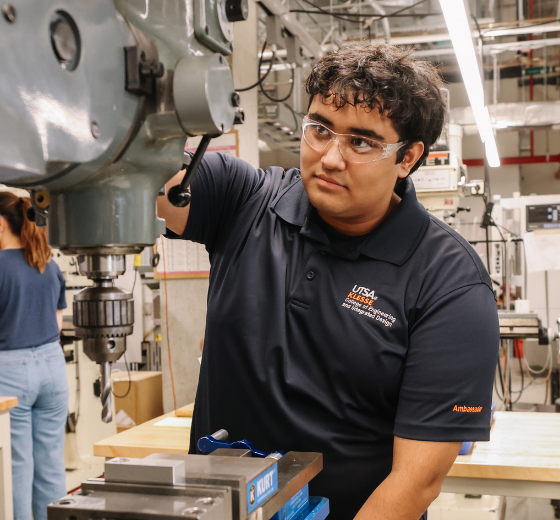
A Klesse College engineering student gains hands-on experience in a campus lab, part of the practical training that prepares students for advanced study and career success through the new 4+1 accelerated degree pathways.
What a difference a year makes.
That is what the Klesse College of Engineering and Integrated Design’s 4+1 accelerated program boils down to. The program, when implemented, will let engineering students with certain majors earn a bachelor’s degree in four years, plus a master’s degree in a different engineering discipline in just one year. Students also have the option of earning a master’s in the same discipline as their bachelor’s degree.
Accelerated bachelor’s and master’s programs are common practice. But those typically focus the degrees on one discipline.
“What we’ve done here is a little different,” Associate Dean of Graduate Programs Saadet Beeson, professor of architecture and planning said. “What we did was work with the Undergraduate and Graduate Advisors of Record to review the curriculum to identify classes students should take in the final year of their undergraduate program that would count for the master’s degree they are aiming to pursue. Each graduate program requires a different set of classes regarding the major of the students, and we worked hard to tailor the pathways accordingly.”
After a series of approvals and a thorough review of the requirements and processes, the program has launched this fall so current junior students can start to plan their course path.
“A traditional two-year master’s program sometimes feels too long,” Beeson said. “Right after graduation, students tend to leave. A recent salary survey by the National Association of Colleges and Employers estimated the median salary for an engineer with a Bachelor of Science was $80,000 while an engineer with a master’s degree earned at least $101,000.
This program will enable our students to get that bump if they stay just one more year. The difference in their salary will be even more drastic if they pursue a degree in a different field. It lowers the education costs for the students and strengthens the college’s reputation and competitiveness.”
Students in the eligible majors can get a leg up on their careers with one less year of class to pursue. The program, Beeson said, reduces the risk of burnout, reduces the students’ tuition bill, possibly their student loans, and gets them one year closer to working.
“Students are going t}o have a completely different level of expertise when they graduate,” Beeson said. “The 4+1 program gives them more flexibility. It offers more flexibility to do the things they love and find the things they’re passionate about.”
Students in mechanical, biomedical or electrical engineering who are interested in learning more, should reach out to thir assigned department Program Manager:
Mechanical Engineering | Ricardo del Castillo Lupio
Biomedical Engineering | Leslie Sanchez
Electrical Engineering | Austin Lord
— Sean M. Wood
